
Before It Had a Name: Unpacking Two Decades of Impact with Remedial Massage
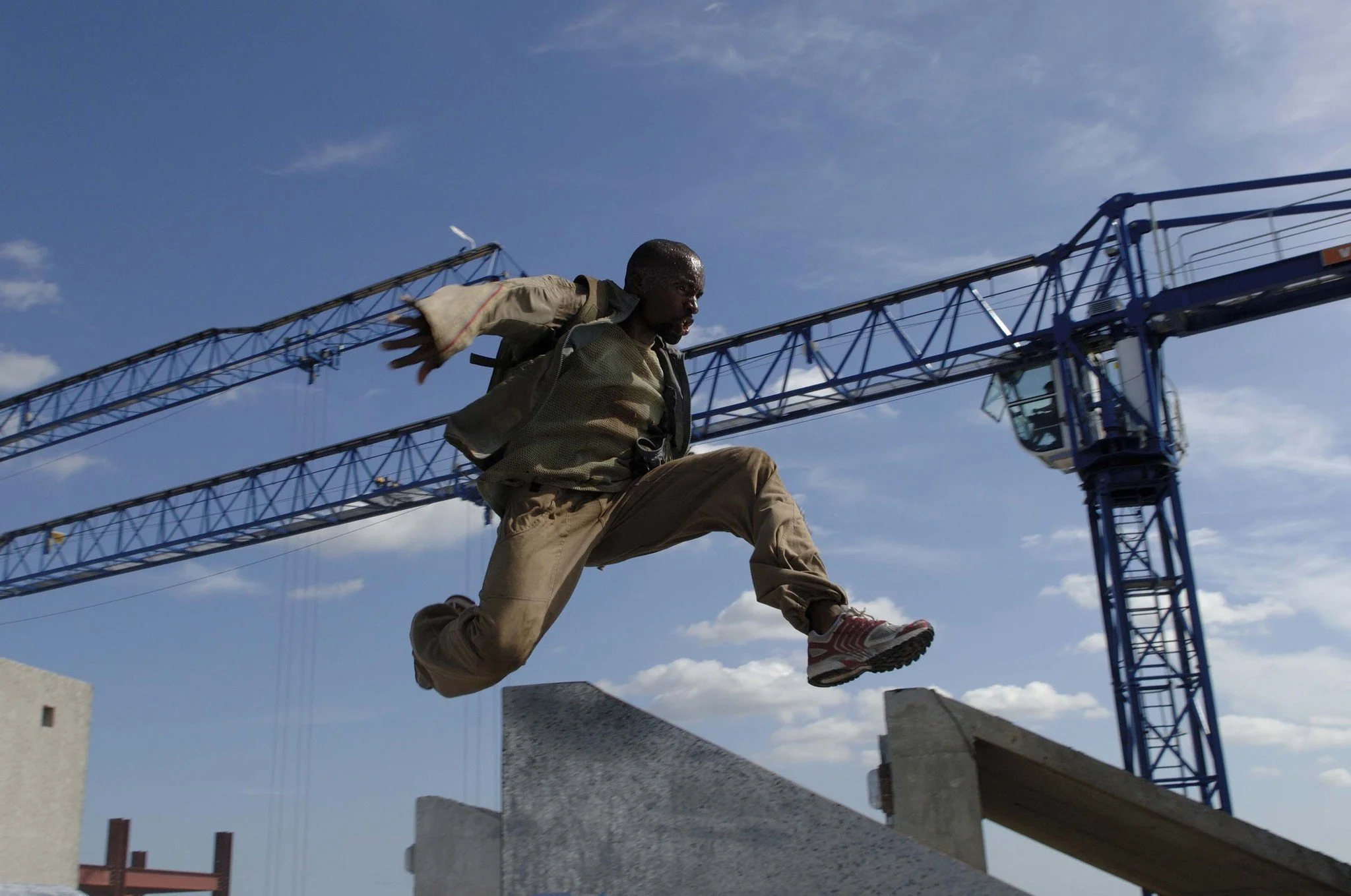
Courtesy of IMDB.com, Casino Royale (2006), Martin Campbell.
It's the love of movement that gives birth to all legitimate soft tissue therapists, that's a fact.
Think back to Casino Royale, 2006. Most people watching thought it was a stunt. It wasn't, or at least not entirely. Sébastien Foucan had been moving like that since the mid-nineties, before parkour had a name most people recognised. The practice predominately existed in Lisses and Evry and eventually made its way into the gaps of London's brutalism, and that was long before it became the visual grammar for every ad agency that needed to say urban and kinetic without paying for the rights.
Then eventually we moved past this cultural boom. The phrase Jump London, retired to some taxi hailing app, dwarfing any digital remnants of the iconic Channel 4 documentary. But parkour did not die. More: the culture got absorbed, the brand deals dried up, more climbing walls opened, and the people who'd spent a decade loading their Achilles tendons on kerbstones just…kept going. Quietly. With older bodies. Damien Walters, the stuntman’s stuntman - still defied gravity, but with a new gravitas - a dad.
What Two Decades of Concrete Does to a Body
Here's what anyone failed to explain back in ‘04 (besides we were too wrapped up in learning the lyrics to Kanye’s College Dropout album): The Achilles doesn't forget. Neither do the knees, the shins, or the wrists. Parkour built the foundations for London’s now popping calisthenics community and a natural byproduct of hours spent artfully dodging security of The National Theatre was an extraordinary physique - proprioception, spatial awareness, a relationship with physical space that most people who've spent their life in gyms never develop. Hyrox where?
However, what it failed to do was to build any particular framework for dealing with the accumulation. The impact of ten thousand landings that went well doesn't announce itself all at once. It files itself away. Let alone the ones that ultimately did not go so well.
Most of us never practiced parkour, simply admirers on the outside looking in. Our accumulation of injuries were earned in an entirely different way and we’ve kept a clear map of this history. A poor working-from-home setup during COVID, tendon damage that calcified into something you just learned to work with, a strained hamstring after joining that run club who did that collab with that brand. Even with months of remedial massage and sport injury massage, it still didn’t feel like it once was. So what gives? In the modern-day context, these aren’t failure states, they are almost badges. The problem is that familiarity with damage isn't the same as having addressed it…early enough.
The Injuries That Became Landmarks
Any remedial therapist worth their weight in salt will understand what is happening on a molecular level. How the formation of scar tissue can quite literally shape and mold your future path and the role soft tissue massage plays in quietly ushering your movement patterns towards optimal functionality. Beyond the soft (if you can even call it that) tissue massage slop littered across social media nowadays, it’s about passively reeducating malformed connective tissue on two things:
1. Mechanotransduction: The remodelling and realigning of disorganised scar tissue under manual therapy pressure. Actively changing cell behaviour.
2. Autonomic Down-Regulation: Shifting the nervous system out of chronic “clamped” fight-or-flight and into a parasympathetic state. Allowing for hypertonic muscle and connective tissue to finally release its protective guarding.
Much like with recovery, Parkour's philosophy is about efficiency - finding the most direct line through any environment. However, with recovery something that initially started out as a practicality or adaptation, can progressively become a hindrance. You didn't stop. You taped it, adjusted and got back on the wall.
Soft Tissue Therapists Should Stop with the Wellness Theatre.
What a remedial therapist should actually be doing when they work on tendon tissue, fascia and muscular structures, isn't mystical. There's no ceremony to it.
Adhesions form in soft tissue after repeated loading and minor trauma - the body's innate attempt to stabilise something that's been stressed, is by introducing the formation of more collagen and restricted fascia.
If you ignore the mechanics of a sports injury massage coupled with expert rehabilitative conditioning, those injuries become adaptations: freezing your kinetic chain. When we physically massage tissue layers, there's no mystical energy shift. It's simply a mechanical release and the conditioning work is what makes those changes stick.
However, left alone those injuries can restrict movement and reduce circulation to structures that already don't get much blood flow. Remedial massage works on that mechanically: breaking down adhesion, restoring range, returning the tissue to something closer to how it's supposed to function. No pomp, or flare.
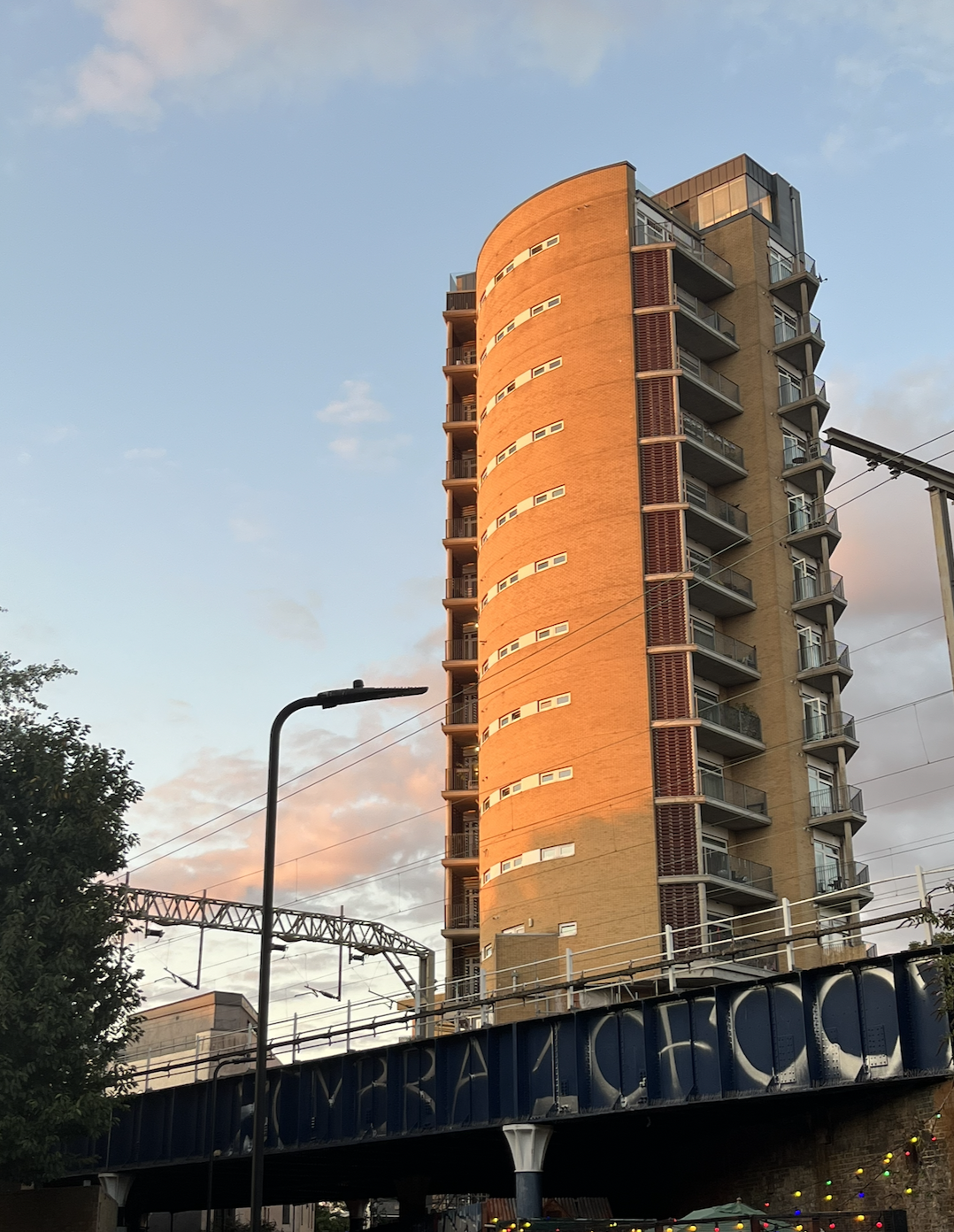
If you are considering scaling a London Fields building, it might be time to book a massage instead.
Remedial Massage in London, For the Bodies London Built
Now that the BJJ gyms are filling up, and London Fields now resembles Muscle Beach Venice in the height of summer, London’s parkour scene has become a veteran reference point rather than a living subculture. But those bodies are still here. Forty-two, forty-eight years old, carrying the specific damage of a practice that asked everything of them and didn't come with an aftercare manual. Massage for tendonitis for them usually means, breaking down a decade of calcified achilles and patellar attachments.
Remedial massage in London should be built for this. For tissue that has history and needs someone who understands how best to usher it back towards functionality.
The Other Side of Taking Your Body Seriously
The philosophy for remedial massage will always be about working with the body, not against it. Finding the line of least resistance. It just takes most people about fifteen years to apply it inward. You spend the first half of life figuring out how to conquer moving for longevity. Then spend the second half learning how to survive that impact.
If you are navigating the accumulation of the last two decades, then perhaps a sports massage could be right for you.
